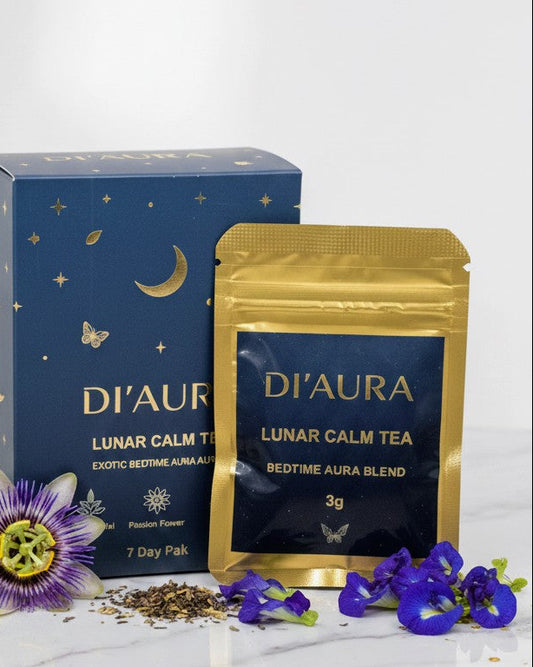
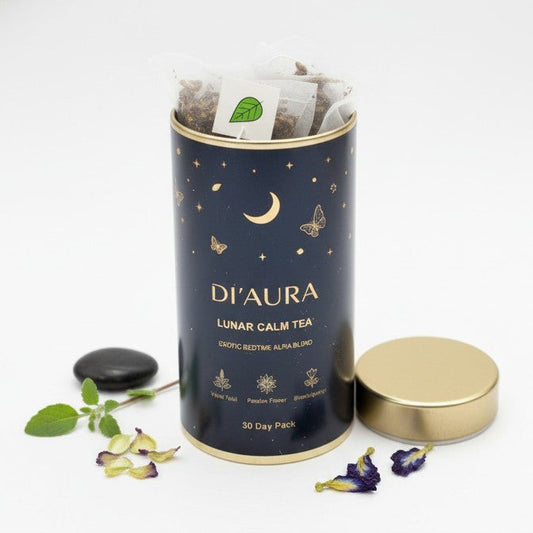
DI’AURA Lunar Herbs (The Super Calm Blend)
The Ancient Botanicals Behind Peaceful, Lighter Evenings
The Lunar Calm blend is crafted from rare, globally respected herbs known across Ayurvedic, tribal and forest traditions for their ability to ease overstimulation, cool the mind, and encourage emotional stillness. These ingredients also carry a wide range of general wellbeing benefits beyond evening calm, from cognitive clarity to hormonal balance, digestion, skin health and even reproductive vitality.
Below is the full Lunar Herb Compendium.
1. Shankhpushpi

Scientific Name: Convolvulus pluricaulis
Common Regions: Indian plains, Himalayan foothills, Rajasthan deserts
Traditional Systems: Ayurveda, Himachali folk medicine, ancient forest remedies
Key Compositions: Alkaloids, flavonoids, glycosides, coumarins
Ayurvedic & Tribal Significance
Regarded as a Medhya Rasayana (nootropic), Shankhpushpi is treasured for calming Vata and cooling excess Pitta - helping stabilise emotional restlessness, racing thoughts and mental fatigue. Tribal communities use it for clarity, sharper recall and balanced mood.
Benefits (General + Broader Wellbeing)
• Reduces mental overactivity & stress
• Supports memory, concentration & cognitive sharpness
• Helps stabilise mood swings
• Known traditionally to support reproductive vitality & libido
• May improve digestion through gentle cooling action
• Supports spiritual clarity and intuitive calm
2. Passion Flower

Scientific Name: Passiflora incarnata
Common Regions: South America, Caribbean, tropical forests
Traditional Systems: Amazonian tribal medicine, European herbalism
Key Compositions: Harmala alkaloids, flavonoids, vitexin, chrysin
Ayurvedic & Tribal Significance
Amazonian tribes have long used Passion Flower for emotional tranquillity, heart relaxation and cooling “inner heat.” It is believed to soothe the nervous system and harmonise the mind–heart connection.
Benefits (General + Broader Wellbeing)
• Encourages mental rest & emotional quietness
• Helps reduce tension & internal agitation
• Supports heart rhythm and cardiovascular calm
• Historically linked with enhanced sensual relaxation & intimacy
• Supports smoother digestion when stress-related
• May help regulate mood and ease irritability
3. Violet Tulsi (Purple/Black Holy Basil)

Scientific Name: Ocimum tenuiflorum (Black Tulsi variant)
Common Regions: Select parts of India, Nepal & Southeast Asia
Traditional Systems: Ayurveda, Yogic healing traditions
Key Compositions: Eugenol, ursolic acid, rosmarinic acid, antioxidants
Ayurvedic & Tribal Significance
Violet Tulsi is considered sacred and powerfully purifying. Across ancient India, it’s regarded as a herb that balances all three doshas, especially calming turbulent Vata and Pitta energies. Known as an adaptogen, it helps the body adjust to stress and emotional fluctuations.
Benefits (General + Broader Wellbeing)
• Reduces stress, worry and emotional heaviness
• Enhances immunity & respiratory strength
• Supports hormonal balance
• Known for promoting mental clarity & sharper intuition
• Traditionally believed to support sexual vitality & reproductive balance
• Helps reduce inflammation & supports skin radiance
4. Blue Lotus

Scientific Name: Nymphaea caerulea
Common Regions: Egypt, Southeast Asia, tropical wetlands
Traditional Systems: Egyptian temple medicine, Thai and Khmer herbal traditions
Key Compositions: Nuciferine, aporphine alkaloids, antioxidants
Ayurvedic & Tribal Significance
Historically used in spiritual rituals, Blue Lotus embodies relaxation, elevated awareness and emotional release. It harmonises the upper chakras; Third Eye and Crown - bringing clarity, intuitive calm and dreamlike serenity.
Benefits (General + Broader Wellbeing)
• Encourages emotional ease & deep relaxation
• Traditionally linked to enhanced sensuality & intimacy
• Supports meditative clarity and spiritual grounding
• Helps reduce oxidative stress & supports skin brightness
• May support hormonal balance & a smoother menstrual experience
• Offers mild mood-elevating effects
5. Butterfly Pea Flower

Scientific Name: Clitoria ternatea
Common Regions: Thailand, Indonesia, Vietnam, tropical India
Traditional Systems: Thai herbal medicine, Sri Lankan Ayurveda
Key Compositions: Anthocyanins (ternatins), antioxidants, cyclotides
Ayurvedic & Tribal Significance
Known as Aparajita in Ayurveda, Butterfly Pea Flower represents victory over mental turbulence. It strengthens memory, soothes the nerves, and cools the emotional body. Its colour-changing nature (blue → violet with lemon) symbolises transformation.
Benefits (General + Broader Wellbeing)
• Promotes relaxation & clear thinking
• Supports hair & skin health (rich antioxidants)
• Traditionally believed to support female reproductive vitality
• Improves circulation & eye health
• Mild digestive support
• Enhances memory & cognition
🌙 Energetic & Chakra Significance of Lunar Herbs
• Third Eye Chakra (Ajna): intuition, clarity, perception
• Crown Chakra (Sahasrara): serenity, higher awareness
• Heart Chakra (Anahata): emotional ease and softness
• Overall: Cooling, calming, grounding, introspective
Dosha Balance (Ayurvedic Insight)
Lunar herbs gently balance:
• Vata: reduces restlessness, anxiety, mind chatter
• Pitta: cools emotional heat, irritation, overwhelm
• Kapha: kept neutral, does not aggravate heaviness
🌙 What Makes Lunar Herbs Unique at DI’AURA?
• Sourced from heritage regions where each herb traditionally grows
• Blended using ancient Ayurvedic logic + modern scientific understanding
• Focused on cooling, calming, balancing energies
• Not only for evening quietness - but for whole-body wellbeing
• Benefits extend to mood, skin, digestion, hormones & reproductive vitality
Featured collection
-
Luxury Bamboo Silk Sleep Mask (Mati Blue)
Regular price £18.00Regular priceUnit price £18.00 each£18.00Sale price £18.00 -
Lunar Calm - Bedtime Aura Blend (7 Day Pack)
Regular price £9.99Regular priceUnit price £1.43 each£12.50Sale price £9.99Sale -
Solar Ignite - Magical Morning Aura Blend (30 Day Pack)
Regular price £39.99Regular priceUnit price £1.33 each£66.00Sale price £39.99Sale -
Lunar Calm - Bed Time Aura Blend (30 Day Pack)
Regular price £34.99Regular priceUnit price £1.17 each£58.00Sale price £34.99Sale